Cuba Visa for Children and Babies: How Parents Apply for Each Child's e-Visa
Planning a family trip to Cuba raises one question earlier than most: does my child really need a visa of their own? The short answer is yes. Every child who travels to Cuba as a tourist needs a tourist visa, and that includes babies who have only just been issued their first passport. There is no family visa, no discount for children and no way of adding a child to a parent's visa.
This guide covers that one step in detail: the e-Visa for minors. It explains what you need before you start, how a parent applies on a child's behalf on Cuba's new consular portal, what changed in November 2026, and which small mistakes cause the most trouble at check-in. If you are at the very beginning of planning, our overview of travelling to Cuba with kids puts the visa in context with D'Viajeros, insurance and everyday life on the island.
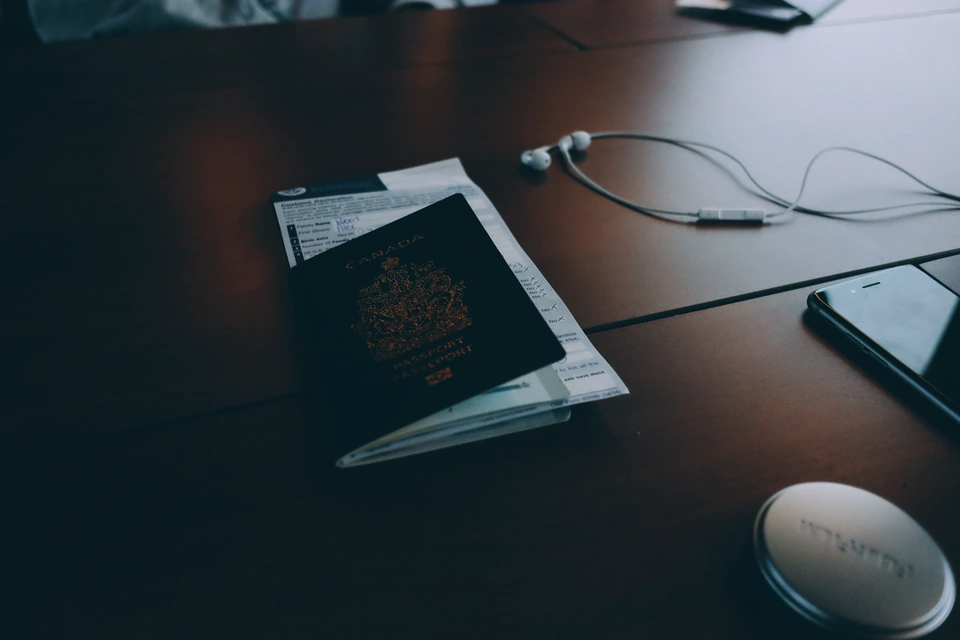
Photo: Alex Robert, Unsplash. CC0, via Wikimedia Commons.
Rules checked on 21 November 2026 against the Cuban consular portal (consular.cu and tramites.consular.cu), GOV.UK travel advice for Cuba and the German Foreign Office's travel advice for Cuba.
Does a child or baby need their own visa to travel to Cuba?
Yes. Cuba treats every person crossing the border as an individual traveller, regardless of age. The e-Visa is linked to one specific passport, so a child needs their own passport first and then their own visa connected to that passport. A newborn travelling on a parent's lap needs exactly the same documents as a teenager with a seat of their own.
This is also how airlines see it. Before boarding, the airline checks that every passenger on the booking has a valid passport, a visa and a completed D'Viajeros declaration. A missing visa for a two-year-old will stop the whole family at the check-in desk, just as a missing adult visa would. Our FAQ makes the same point: every traveller, including infants, needs their own visa code.
One group is different. Children who hold Cuban nationality, for example because one parent is Cuban, are treated as Cuban citizens in Cuba and generally have to enter and leave on a Cuban passport rather than a tourist visa. If that applies to your family, the tourist e-Visa is the wrong product; we explain the background in a separate guide to children with Cuban dual nationality (planned).
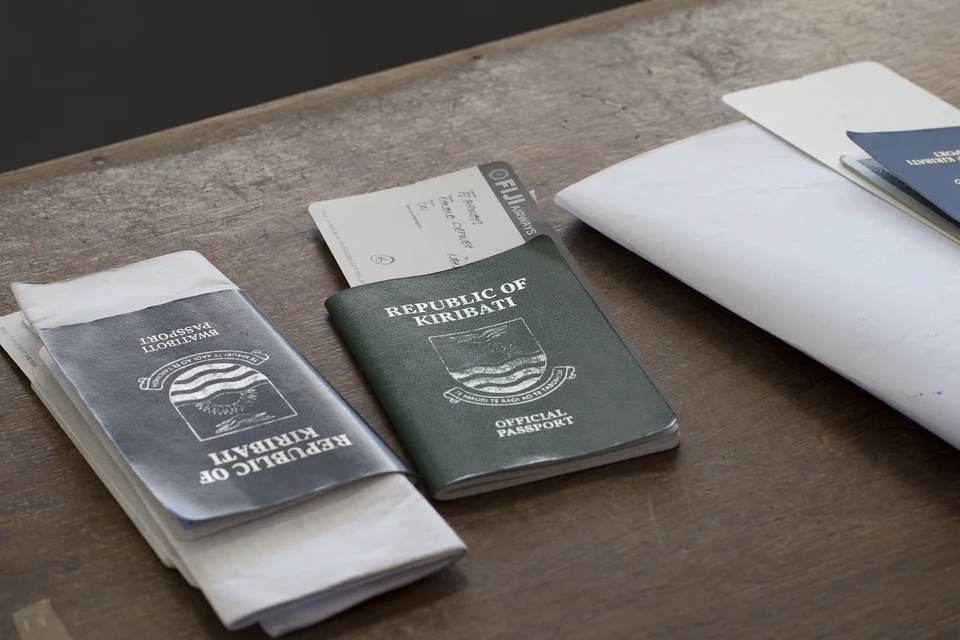
Photo: Calvin Smith. CC BY 2.0, via Wikimedia Commons.
What your child needs before you start the e-Visa application
The application itself is short, but it depends on two things being in place: a valid passport and a working email address.
A passport that lasts long enough. GOV.UK states that a passport used to enter Cuba must be valid for at least six months after the date of arrival and three months after the planned departure. The German Foreign Office cites six months on arrival. Children's passports in many countries are issued for shorter periods than adult ones; a British child passport, for example, is valid for five years. Check the expiry date against your return date now. If you need to renew, do it before you apply, because the visa is tied to the passport number and a new passport means a new visa.
A reachable email address. The visa code is sent by email. For children, parents normally use their own address. That is fine, but make sure you can tell the messages apart when several family members' codes arrive at the same inbox.
A clear scan or photo of the passport data page. Reports from applicants on the new portal describe an upload of the passport page. Take the photo in daylight, without glare, with all four corners visible. For babies, the passport photo often looks very different from the child a few months later; that is normal and not a reason to delay the visa, but do check that the passport has not been damaged.
Confirmed travel dates and an address in Cuba. Have your flight dates and your first hotel or casa particular to hand, since you will be asked about the trip.
How to apply for a Cuba e-Visa on behalf of a minor
Since 4 November 2026, tourist visas are requested through the consular portal of Cuba's Ministry of Foreign Affairs at consular.cu, which forwards you to the application at tramites.consular.cu. The previous application website was switched off at the end of October 2026 and is no longer reachable. Several government pages, including GOV.UK and the German Foreign Office, still mention the old address, so do not be surprised if a link you have saved no longer works.
The application follows the same pattern for adults and children. A parent or legal guardian completes it using the child's details:
1. Confirm your email address. The portal sends a one-time code to verify it.
2. Choose the country of application. You select the country you are applying from, and the portal assigns a Cuban embassy or consulate that will issue the visa. The fee and the accepted payment methods depend on that consulate.
3. Enter the child's passport data exactly as printed. Names, date of birth, nationality, passport number and expiry date must match the machine-readable zone of the passport, character for character.
4. Upload the passport image and review the summary.
5. Pay the consular fee using the method offered for your consulate, then wait for the decision. The portal states that it responds within 72 working hours.

Photo: kychan, Unsplash. CC0, via Wikimedia Commons.
The new portal allows up to ten people to be bundled into one application, which is convenient for families. It is still worth checking each person's data separately before you submit, because a mistake in one child's entry is easy to miss in a long list. Our article on what to check before payment lists the points we look at for every applicant, and the Cuba e-Visa documents guide explains what the application pack should contain.
If you would rather not handle several applications yourself, our Cuba e-Visa service checks and submits the visa for each traveller in the family. The price is shown per person and includes the consular fee.
How much does a Cuba visa cost for a child?
There is no reduced children's rate. Each traveller pays the full consular fee, so a family of four pays four fees. The amount depends on the consulate the portal assigns to you and is displayed during the application; for applications handled by the Cuban embassy in Germany, the portal was reported to show €30 per tourist visa in November 2026. Payment methods also vary by consulate. Some only accept bank transfers that must arrive several working days before the application is processed, which can add almost a week to your timeline.
Because fees and payment routes are set locally and change from time to time, we do not quote fixed government prices in our guides. Our article on Cuba e-Visa costs explains how to compare offers sensibly, and the live price for our service is always on the application page.
What the e-Visa allows your child to do
The tourist e-Visa is valid for a single entry and a stay of up to 90 days. Extensions are possible in principle, but the decision lies with the Cuban immigration authorities, and the German Foreign Office notes that power cuts have made extensions difficult even in Havana. For a normal family holiday of two or three weeks, this is rarely relevant.
The visa is linked electronically to the passport you used to apply. There is no paper document to carry; immigration officers see the visa when they scan the passport, and the visa code also appears on your D'Viajeros declaration. Keep the confirmation emails for every child in a dedicated folder on your phone and print a copy, because mobile data in Cuba is unreliable.
The most common mistakes on children's visa applications
Most problems with children's visas are not refusals but mismatches between the visa and the passport. The usual causes are:
- Using an old passport number. Parents often renew a child's passport while planning the trip and then apply with the number from the expired one. The visa is then attached to a document the child will not be travelling on.
- Swapping first and last names. This happens easily with double-barrelled surnames or when the child's surname differs from the parent's. Copy the order from the passport, not from the booking.
- Forgetting middle names. If a middle name is printed in the passport, it belongs in the application.
- Mixing up siblings. In a family application, twins or siblings with similar names and dates of birth are easy to confuse. Check that each passport number sits next to the right name.
- Applying too late. Allow at least one to two weeks, more if your consulate only accepts bank transfers. Our guide to Cuba e-Visa processing times explains why it is unwise to rely on fast turnaround.
If a code does not arrive or something looks wrong after submission, our article on fixing e-Visa problems walks through the next steps.
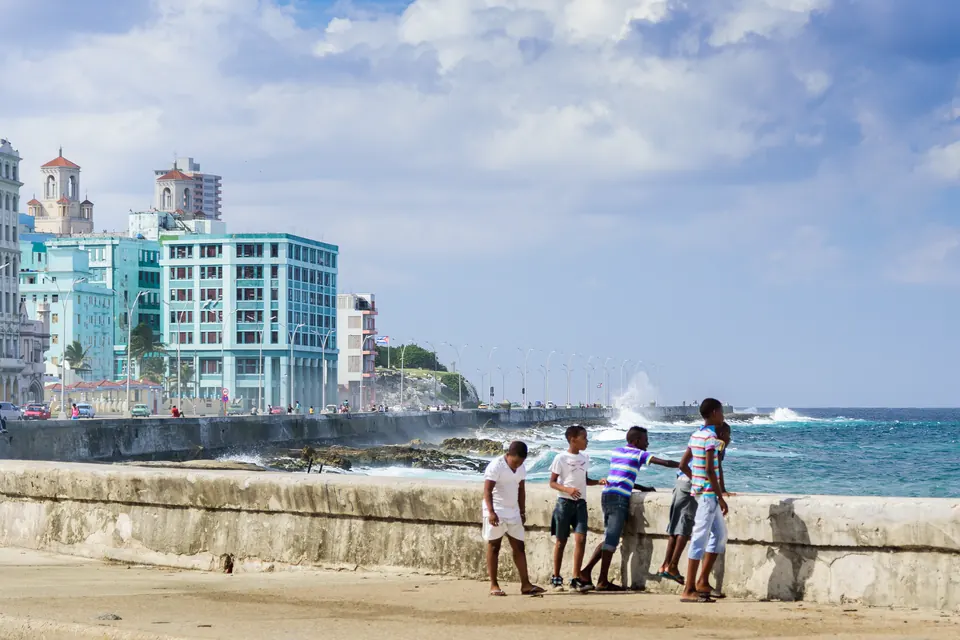
Photo: Ashu Mathura. CC BY-SA 2.0, via Wikimedia Commons.
After the visa: D'Viajeros, consent letters and insurance for children
The e-Visa is only one of several documents a child needs. Shortly before departure, every family member also needs a D'Viajeros declaration with its own QR code. GOV.UK refers to a window of 72 hours before entering Cuba, while the German Foreign Office states 48 hours before check-in; completing it within 48 hours of check-in satisfies both. A parent fills in the child's declaration, entering the child's e-Visa code, which is why it pays to keep a tidy list of which code belongs to which child. Our planned guide to D'Viajeros for children covers this step in detail, and our optional D'Viajeros filling service can complete the forms for you.
If only one parent is travelling, a written consent letter from the other parent is a sensible precaution even though the German Foreign Office has not observed problems with foreign minors so far. We cover the details in our planned article on minors travelling with one parent. Finally, Cuba requires valid travel medical insurance for every traveller, children included; see our guide to Cuba travel insurance and the planned family-specific article on insuring children for Cuba.
Should you travel to Cuba with children right now?
A visa answers the question of whether your child may enter, not whether now is a good time to go. Cuba is going through a severe energy and supply crisis, with long power cuts, water shortages and limited medicines, and international card payments have been unreliable. In November 2026 the German Foreign Office strongly advises against travel to Cuba, and GOV.UK also describes significant disruption. Read our article on the current situation in Cuba and your own government's latest advice before you book or pay for visas.
It is also worth thinking a few years ahead. Under US rules, anyone who has been in Cuba on or after 12 January 2021, including children, can no longer use ESTA and must apply for a US visa instead. Our sister site explains this in its guide to US travel after Cuba.
Photo: Hana Gaon. CC BY-SA 4.0, via Wikimedia Commons.
A short checklist for your children's Cuba visas
Before you close the laptop, go through each child in turn:
- Passport valid for at least six months after arrival and three months after departure
- e-Visa applied for with the current passport number and names exactly as printed
- Confirmation email with the visa code saved and printed
- Visa code ready for the child's D'Viajeros declaration
- Insurance certificate listing the child by name
Our Cuba entry documents checklist helps you check the rest of the family's papers. With every child's visa in place, the remaining preparations become routine, and you can return to the planning that children enjoy most. For everything else about a family holiday on the island, head back to our guide to Cuba with kids.
All links used in this article
- Cuba with kids (hub): /en/blog/cuba-with-kids.html
- D'Viajeros for children (coming soon): /en/blog/dviajeros-for-children.html
- Minors travelling with one parent (coming soon): /en/blog/cuba-minor-travelling-with-one-parent.html
- Children with Cuban dual nationality (coming soon): /en/blog/cuban-dual-national-children.html
- Insuring children for Cuba (coming soon): /en/blog/cuba-family-insurance.html
- Cuba e-Visa service: /en/
- D'Viajeros filling service: /en/dviajeros/
- FAQ: /en/faq
- Before payment: /en/blog/cuba-evisa-before-payment.html
- e-Visa documents: /en/blog/cuba-evisa-documents.html
- e-Visa cost: /en/blog/cuba-evisa-cost.html
- Processing time: /en/blog/cuba-evisa-processing-time.html
- e-Visa problems: /en/blog/cuba-evisa-problems.html
- Cuba travel insurance: /en/blog/cuba-insurance.html
- Current situation in Cuba: /en/blog/cuba-energy-crisis.html
- Entry documents checklist: /en/blog/cuba-entry-documents-checklist.html
- US travel after Cuba (esta-express.com): esta-express.com/en/blog/cuba-travel-history/
- Cuban consular portal: consular.cu
- Visa application: tramites.consular.cu
- D'Viajeros: dviajeros.mitrans.gob.cu
- GOV.UK, Cuba entry requirements: gov.uk/foreign-travel-advice/cuba/entry-requirements
- German Foreign Office, Cuba: auswaertiges-amt.de
Cuba Visa Express is a private service of 1a Visum Service oHG and not a government website. The Cuban authorities decide on every visa. Rules can change at short notice; please check the official sources before you travel.
Important Notice
The information on this page is provided for general informational purposes only and does not constitute legal advice. Cuba Visa Express is a private service provider and not a government authority, embassy, or consulate.
Visa requirements and entry regulations can change at short notice. We do not guarantee the accuracy, completeness, or timeliness of the information provided. Only the regulations published by the Cuban authorities at the time of your application and travel are authoritative.
As of: 21 November 2026
Verify the requirements that apply to your passport, purpose and itinerary with the relevant Cuban and home-country authorities and your airline before travel.
Private visa service Cuba Visa Express is a private service provider. This is not a government website, and not an embassy or consulate.
Review the current price, included support and terms before ordering.